Excellent service and knowledgeable engineers
They were polite, efficient, extremely knowledgeable and kept me updated as the detection progressed.
ColinReview excerpt
Read full reviewFor listed homes and historic buildings anywhere from Olney in the north to Taplow and Iver in the south. Tell the office where water or damp is showing, what you know about the listing and which original finishes need care.
Discuss your building0333 567 2631Office: Mon–Fri, 7:30am–6:30pm
Weekends closed
Water in an older building rarely shows itself where it starts. These are common starting points for an enquiry, before anyone decides what, if anything, needs opening up.
Pipework can run under boards, behind panelling or inside fitted joinery, and older alterations may have moved it. Say which finishes are original before anything is lifted.
A meter that moves with everything turned off suggests water is escaping from the supply. Isolating sections of pipework helps narrow down where.
Much of the planning happens before anyone arrives, because the building, its finishes and any permissions shape what can be done.
Give the postcode, where water or damp is showing and what you know about the listing, plans and earlier investigations. The office discusses suitability before a visit is booked.
Settle what will be investigated, which areas can be reached and who else needs to be involved. Request the booking terms before confirming.
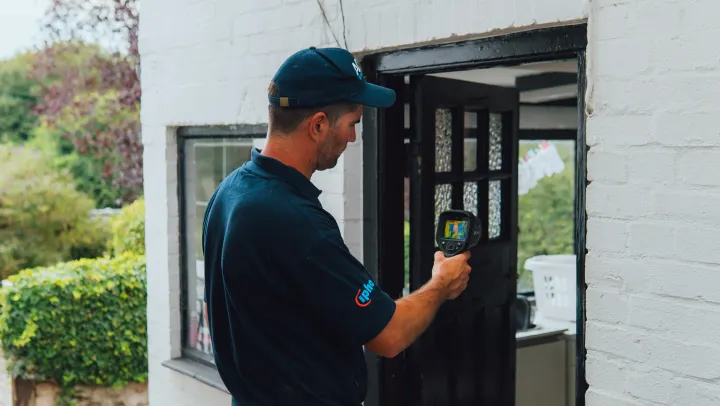
The engineer carries out the agreed investigation, using methods suited to the system and the fabric. Any further opening-up is discussed before it happens.
The engineer prepares written findings to share with your advisers. A suspected location can still need further access before it is confirmed.
Methods are chosen for the system, the materials and the access available. Each has limits, so the findings are read together.
How methods are chosenADI provides leak detection across England, Scotland and Wales. The places below are examples, grouped into Milton Keynes and the four former district areas that now make up Buckinghamshire Council. The list is not complete, so call with the full postcode wherever the building is.
Tracing a leak and changing historic fabric are separate decisions. Whether the work that follows needs consent is a question for the council.
Read the consent guidanceSelected Trustpilot reviews of ADI’s wider service.
They were polite, efficient, extremely knowledgeable and kept me updated as the detection progressed.
ColinReview excerpt
Read full reviewHe was very thorough with his work and communicated everything very clearly.
JohnReview excerpt
Read full reviewHammad found the source after conducting a series of checks.
JamieReview excerpt
Read full reviewYes. Milton Keynes is part of ceremonial Buckinghamshire, but it has its own city council, so consent questions there go to Milton Keynes City Council rather than Buckinghamshire Council.
If the building is in Burnham, Farnham Common or Taplow, yes. Those Buckinghamshire places use a Slough or Maidenhead post town. Coverage is checked against the full postcode either way.
It can. Buckinghamshire Council lists changing materials, for example from metal pipes to plastic pipes, among the work that needs listed building consent. Check a proposed repair with the council before it goes ahead. Read the council’s guidance.
The places on this page are examples. Call with the full postcode and a short description of the building, and the office will check suitability and appointment availability.
That depends on the postcode, the building and the appointments available. Office hours are not a promise of engineer attendance, so ask about arrangements for your visit when you call.
Not every investigation needs it, but it cannot be ruled out in advance. Tell the office about original finishes and restricted areas, and settle any further access, and the permissions it may need, before work affecting the fabric goes ahead.
The local planning authority, usually through its conservation or heritage officers. A leak investigation does not replace that advice. Read the consent guidance.
Tell ADI where the water is showing, what has changed and what you know about the building.
Discuss your building0333 567 2631Office: Mon–Fri, 7:30am–6:30pm
Weekends closed