Start with a call about suitability
Tell the office where the problem is showing, when it started and what has already been investigated. Mention the building’s listed status, any known alterations and the people advising you.
ADI can discuss whether a plumbing, heating, roof or other ingress investigation is appropriate. Ask what the proposed visit covers, the price, any exclusions and the arrangements for written findings. A quote depends on the enquiry; there is no fixed fee stated on this site.
Preparing access and protecting historic fabric
Share listing information and plans if you have them, along with restrictions on rooms, voids, floors and finishes. Confirm who can authorise access and who needs to advise on work affecting the fabric. Agree any proposed opening-up and check consent requirements before it proceeds.
Check these arrangements before booking
- Access inside the property is required. Shared or adjoining premises may also need to be accessible.
- ADI’s terms require lift access for properties more than two storeys high.
- The engineer needs to unload immediately outside, with free parking within 100 metres for the duration of the visit.
- Relevant rooms, meters and functioning isolation points need to be accessible. Tell ADI if leak-sealing products have been used.
- Roof enquiries require safe roof or loft access. Any drone use depends on the site and conditions.
Parking and transit charges may be added at cost plus VAT. Visits aborted because suitable access or parking is unavailable are fully chargeable under the booking terms. Discuss any difficulty before confirming the appointment.
Request the applicable booking terms from ADI before confirming the appointment. They set out the full requirements. See how to request the booking terms. If an owner, agent and occupier are coordinating the visit, make sure everyone has the same access plan.
Leak detection methods: thermal, acoustic and tracer gas
The engineer may use a combination of methods suitable for the system, materials and access. Equipment does not remove the need to interpret the findings.
- Thermal imaging and moisture measurements
- These can help compare patterns. A thermal image shows surface temperatures; masonry meter readings can be influenced by salts and material changes. They do not establish a source in isolation.
- Acoustic and tracer-gas investigation
- Listening equipment can help investigate sounds associated with escaping water. Tracer-gas equipment can assist on suitable systems. Usefulness depends on the problem and site conditions.
- Inspection of accessible voids
- An inspection camera can help where suitable access exists. Any additional opening needed should be discussed before work proceeds.
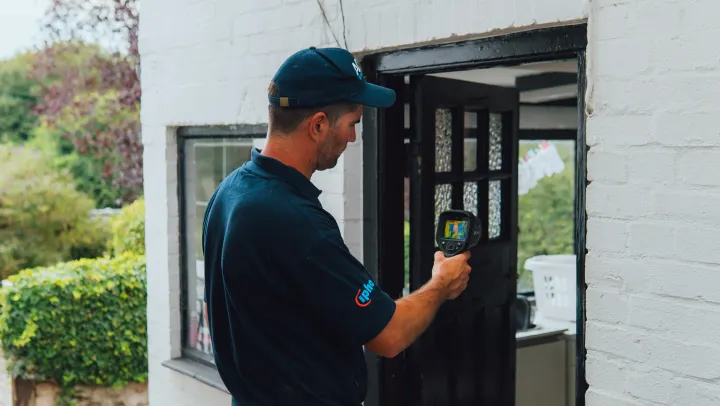
The aim is to reduce unnecessary disturbance. Further access can still be needed to confirm a location, and the leak may remain approximately located until it is exposed.
What leak detection findings can tell you
The attending engineer prepares written findings from the investigation. Discuss who should receive them, especially where an owner, managing agent, insurer or adviser is involved. ADI’s terms state that reports follow full payment; ask about the arrangements before booking.
The findings can inform a conversation about the next step. They are not listed building consent, a heritage impact assessment, structural certification or a decision about liability. Insurance acceptance and report turnaround are not guaranteed by this website.
Leak detection does not include exposing the leak. ADI does not repair roofs or building fabric. Other repairs, further appointments and additional work may carry separate charges. Waste removal is for the customer to arrange. Confirm the scope and any further work with ADI rather than assuming it is included.
Case study: a leak located beneath a solid wall
In one ADI investigation, the water meter showed a leak rate of about 1 litre per minute with nothing in use. Isolating the boiler’s cold feed showed the loss was on the cold mains, and tracer gas and acoustic equipment then located the leak beneath a solid wall between two rooms.
The leak was found, but the repair was not carried out at the visit. The wooden floor needed lifting, and because the property was believed to be listed, the next step was checking with the insurer what work could be done.
Questions to settle before booking
Who needs to be involved before the visit?
The person arranging access, the bill payer and anyone advising on protected fabric should understand the proposed scope. Where access or alterations need third-party or statutory permission, settle that separately from agreeing the appointment.
Can you carry out the repair at the same visit?
Do not assume a repair is included. Discuss the likely next steps and any additional charge with ADI. Work affecting historic fabric may need advice or permission before it can go ahead.