Leak detection for listed buildings in Greater London

For listed homes and historic buildings across Greater London. Tell the office where water or damp is showing, what you know about the listing and which finishes need protecting. Share any existing investigation records so the visit can be planned around the building rather than assuming modern pipe routes.

Discuss your building0333 567 2631

Office: Mon–Fri, 7:30am–6:30pm
Weekends closed
Read the local investigation
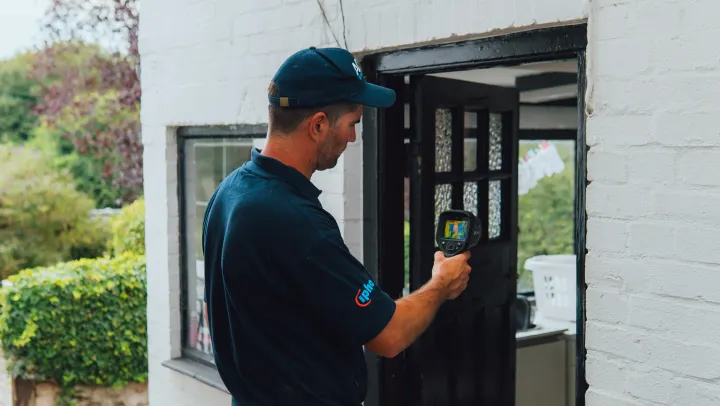
An ADI engineer examining a painted brick wall with a thermal imaging camera

Areas we cover in Greater London

Greater London place examples

  • Croydon
  • Bromley
  • Enfield
  • Harrow
  • Hayes
  • Romford
  • Richmond
  • Sutton

Map of Greater London

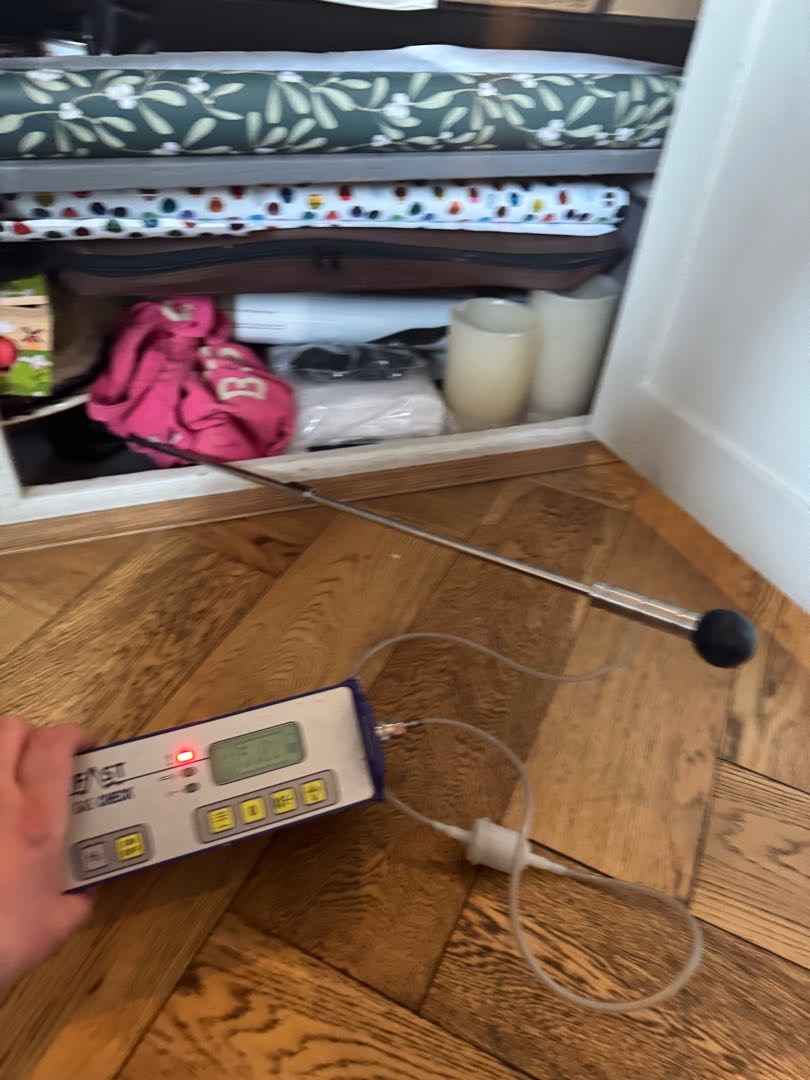
A suspected supply leak beneath fitted joinery in London

Tracer-gas analyser beside fitted joinery
Tracer-gas testing beside the fitted joinery. The suspected pipe fault had not been exposed.

At a London property described as listed in the engineer’s report, continuing meter movement prompted an investigation of the water supply. Pressure testing and tracer gas gave the strongest indication beneath a built-in cupboard.

The cupboard could not be disturbed without prior approval. The customer needed to arrange authorised removal by a third party before the suspected area could be opened and the pipework repaired. No repair was carried out during this visit, and the report does not record an exposed fault or a successful retest.

Buildings and situations to discuss

Leak detection services in Greater London

Water in an older building rarely shows itself where it starts. These are common starting points for an enquiry, before anyone decides what, if anything, needs opening up.

Water behind a wall
or beneath a floor

Share plans and alteration records, marking original boards, joinery or plaster that restrict access.

A water bill that keeps
rising, with nothing showing

Identify the meter and shared connections. Consumption records help assess whether supply testing is appropriate.

Heating pressure
that keeps dropping

Provide pressure logs and earlier heating checks; losing pressure does not locate the fault.

Damp with
an uncertain source

Record changes after rain, heating or water use. Moisture readings alone do not establish the cause.

Leak detection methods and equipment

Methods are chosen for the system, the materials and the access available. Each has limits, so the findings are read together.

How methods are chosen
Pressure testing
An isolated section either holds pressure or it does not. Continuing meter movement here led to a supply test before anything was opened.
Tracer gas
Introduced into suitable isolated pipework and detected where it surfaces. It gave the strongest indication beneath a built-in cupboard on this visit.
Thermal imaging
Records surface temperature differences through plaster, panelling and boarding, which can trace a pipe route without lifting an historic finish.
Moisture meters
Readings across a wall or floor show how far water has travelled, so any opening-up can be argued for over the smallest area.

Consent and local information

Tracing a leak and changing historic fabric are separate decisions. Whether the work that follows needs consent is a question for the council.

Read the consent guidance
County boundary
This page follows the ceremonial county of Greater London: the 32 London boroughs, including Westminster, but excluding the separate City of London.
Before work starts
Historic England advises checking proposed work with the local authority conservation officer. Alterations or extensions affecting a listed building’s special character, and demolition, require listed building consent. Confirm the requirements for the particular work before arranging it.
Planning access
Identify fragile surfaces, original finishes and areas that cannot be entered. Share any pipe drawings and repair records. Agree what can be inspected and who must authorise any further access before work starts.
Water supply
The drinking-water supplier depends on the address. Check the actual supplier before reporting a public-side leak; a wastewater service area does not establish who supplies the drinking water.

ADI Leak Detection reviews

Selected Trustpilot reviews of ADI’s wider service.

Read all reviews on Trustpilot

Selected excerpts from five-star reviews of ADI’s wider service across the UK.

Questions about Greater London

Which parts of Greater London does this page cover?
This page follows the ceremonial county of Greater London: the 32 London boroughs, including Westminster, but excluding the separate City of London. The places listed are examples within Greater London, not a complete list or a record of past jobs. Call with the full postcode to discuss the property and current availability.
Who should advise on consent before altering a listed building?
Ask the local authority conservation officer about the proposed work. Historic England’s guidance explains the consent process; a leak survey does not itself authorise alterations.
Will the investigation mean lifting an old floor?
The engineer starts with appropriate non-invasive tests to narrow the search. An opening may still be needed to confirm a finding or carry out a repair. Explain the floor construction and any restrictions before booking, and agree any proposed access separately.
What information helps when the leak is intermittent?
Keep a record of when the damp appears and whether it follows water use, heating or rainfall. Photographs of the changing patch and details of previous repairs can help the office scope the investigation. Do not remove protected finishes to look for a source before discussing access.
Do you cover places that are not named here?

The places on this page are examples. Call with the full postcode and a short description of the building, and the office will check suitability and appointment availability.

How soon can an engineer attend?

That depends on the postcode, the building and the appointments available. Office hours are not a promise of engineer attendance, so ask about arrangements for your visit when you call.

Will floors or finishes have to be opened up?

Not every investigation needs it, but it cannot be ruled out in advance. Tell the office about original finishes and restricted areas, and settle any further access, and the permissions it may need, before work affecting the fabric goes ahead.

Who decides whether work needs listed building consent?

The local planning authority, usually through its conservation or heritage officers. A leak investigation does not replace that advice. Read the consent guidance.

Talk to ADI about a leak
in your building

Tell ADI where the water is showing, what has changed and what you know about the building.

Discuss your building0333 567 2631

Office: Mon–Fri, 7:30am–6:30pm
Weekends closed