Paul was friendly, courteous and professional throughout the work. He kept us informed at all stages and explained fully.
CAROLYN CHADWICKReview excerpt
Read full reviewWater around a rooflight in a West Midlands listed property needs the affected assembly tested separately from surrounding masonry. Share photographs, earlier repairs and access restrictions. The Derbyshire case below shows why water and tracer-gas results must be read together.
Discuss your building0333 567 2631Office: Mon–Fri, 7:30am–6:30pm
Weekends closed
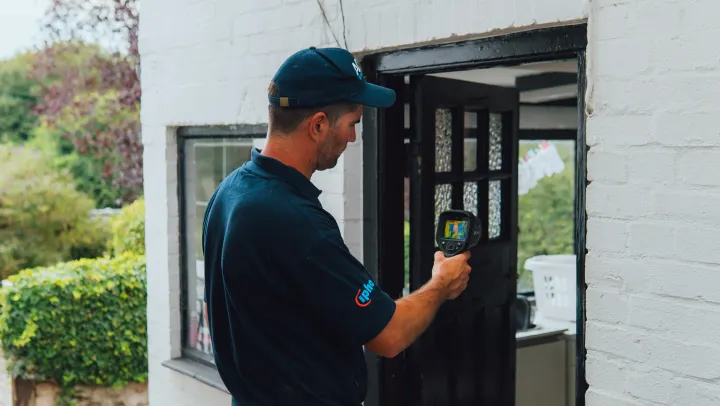
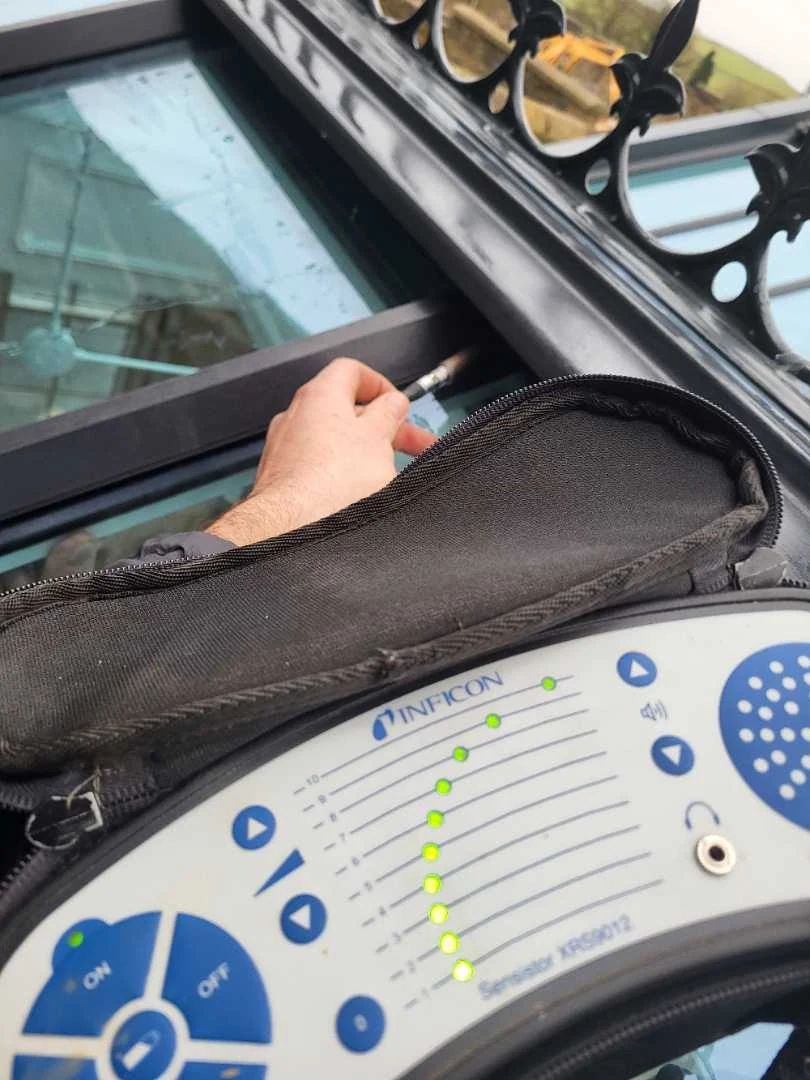
In December 2024, ADI investigated reported water ingress around two orangery skylights and a gym skylight at a listed castle in Riber, Matlock, Derbyshire. This job took place outside the West Midlands. The investigation concerned the modern skylight assemblies.
Flood testing did not produce water ingress at the two orangery skylights. Tracer-gas checks detected gas at points around them. At the gym skylight, flood testing did show water ingress, and tracer-gas checks identified points there too.
The report identified compromised seals and recommended repairs to all three skylights. It did not record completed seal repairs or a post-repair retest.
Water in an older building rarely shows itself where it starts. These are common starting points for an enquiry, before anyone decides what, if anything, needs opening up.
Share plans and alteration records, marking original boards, joinery or plaster that restrict access.
Identify the meter and shared connections. Consumption records help assess whether supply testing is appropriate.
Methods are chosen for the system, the materials and the access available. Each has limits, so the findings are read together.
How methods are chosenTracing a leak and changing historic fabric are separate decisions. Whether the work that follows needs consent is a question for the council.
Read the consent guidanceSelected Trustpilot reviews of ADI’s wider service.
Selected excerpts from five-star reviews of ADI’s wider service across the UK.
Paul was friendly, courteous and professional throughout the work. He kept us informed at all stages and explained fully.
CAROLYN CHADWICKReview excerpt
Read full reviewI was kept informed all through the process. Paul was respectful and took time to listen and answer any questions I had.
June TownerReview excerpt
Read full reviewYes. At the Matlock property in Derbyshire, outside the West Midlands, flood testing showed ingress at the gym skylight but not at the two orangery skylights. Tracer-gas checks identified points at all three. The report recommended seal repairs; no completed repair or post-repair retest was recorded.
The places on this page are examples. Call with the full postcode and a short description of the building, and the office will check suitability and appointment availability.
That depends on the postcode, the building and the appointments available. Office hours are not a promise of engineer attendance, so ask about arrangements for your visit when you call.
Not every investigation needs it, but it cannot be ruled out in advance. Tell the office about original finishes and restricted areas, and settle any further access, and the permissions it may need, before work affecting the fabric goes ahead.
The local planning authority, usually through its conservation or heritage officers. A leak investigation does not replace that advice. Read the consent guidance.
Tell ADI where the water is showing, what has changed and what you know about the building.
Discuss your building0333 567 2631Office: Mon–Fri, 7:30am–6:30pm
Weekends closed